Lined Bioretention in Toronto: Follow the Water Before Fixing the Layout
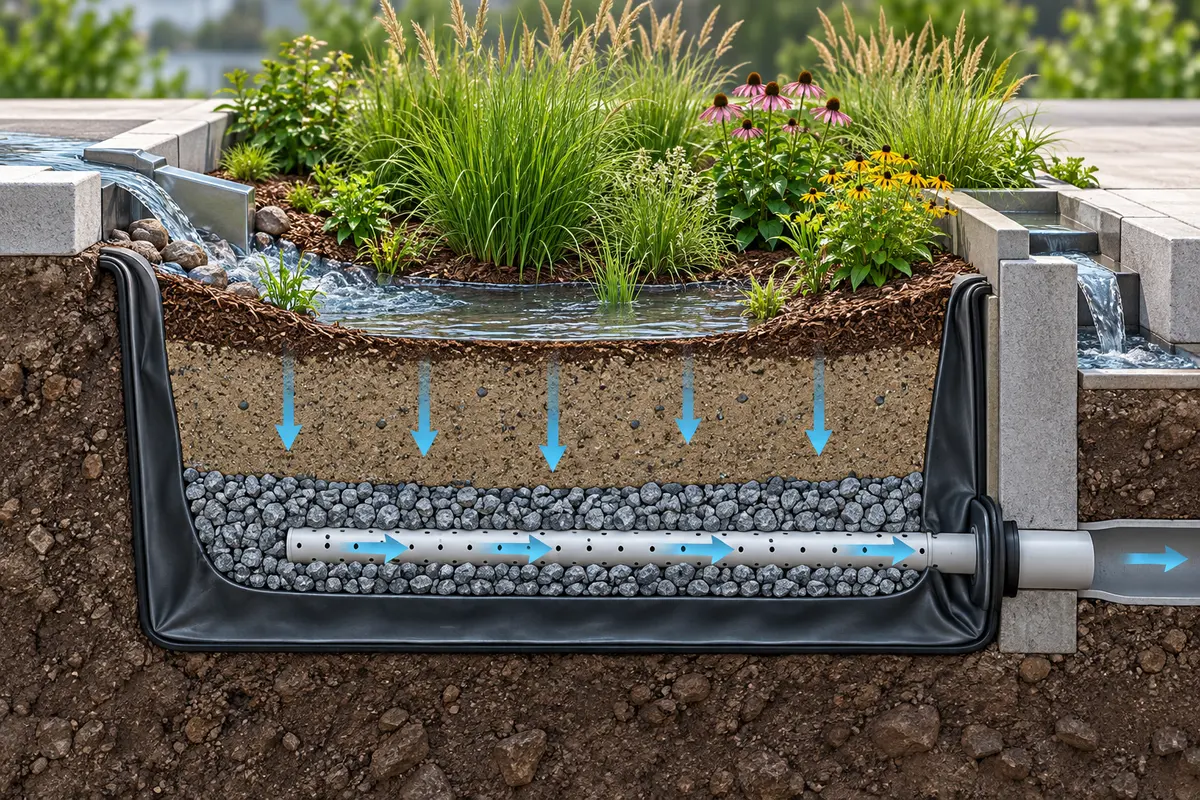
When infiltration into native soil is unsuitable, a lined bioretention system may be considered as part of a site-specific stormwater strategy. Its purpose differs from an infiltrating facility: runoff is contained, passes through filter media and leaves through a designed drainage arrangement. A separate overflow addresses excess or bypass flow. Adding a liner does not, by itself, establish site suitability or demonstrate that all stormwater objectives have been met.
Start with the site and the outlet
Document the evidence supporting containment, the area contributing runoff and the conditions at the inlet. Before committing to the footprint, compare the available inlet, media, drain and outlet elevations. The proposed layout must be considered alongside the downstream connection and relevant approvals. A workable-looking planting area is not enough if the drainage arrangement has not been resolved.
Coordinate containment and materials
The liner needs continuity through its edges and connections, protection against damage and properly coordinated sealed penetrations. Separator geotextile and waterproof containment perform different functions; one should not be substituted for the other. Specify the intended filter-media performance and review proposed substitutions against that basis. Changing a material can affect how the system filters and drains, even when the finished surface looks similar.
Plan for excess water and maintenance
The underdrain conveys filtered water, while the separate overflow manages water that exceeds or bypasses the intended treatment route. Review how the system responds to blockages and where high water would travel. Also consider how drainage recovers and how the facility can be inspected and maintained. Access to relevant components should remain practical after grading, servicing and landscape decisions are coordinated.
Keep performance claims separate
Treatment, temporary storage and water balance are not interchangeable. Calculations should explain which function is being claimed without counting the same storage or retention twice. STEP describes filtration-only stormwater planters and a flow-through configuration without a storage reservoir. That configuration is a specific reference, not a universal description of every lined system. STEP stormwater-planter guidance.
The applicable jurisdiction also matters. Toronto’s September 2021 green-infrastructure criteria address the public right-of-way, including future City right-of-ways within development projects. They are not automatically a private-development approval standard. Confirm project-specific criteria and current authority requirements. Toronto right-of-way design criteria.
How Elmid Design Inc. supports the review
Elmid Design Inc. is a professional engineering and design consulting firm. Within the agreed scope, it helps review constraints, coordinate grading, servicing and landscape interfaces, prepare plans, sections and calculations, and respond to review comments. System installation and permit issuance are separate responsibilities. The practical starting point is a documented containment rationale and a coordinated route for water through, out of and around the proposed facility.
Source attribution: This original adaptation draws on Elmid Design Inc.’s new article, Lined Bioretention Design in Toronto: When Infiltration Is Unsuitable.


Comments
Post a Comment